

Old-School Classic
Buttermilk Pancakes From Scratch
Tender, tangy, and beautifully golden with a simple 15-minute rest that makes all the difference.
There is something almost meditative about standing at a griddle on a quiet weekend morning, spatula in hand, watching little bubbles form on the surface of a pancake and knowing the exact moment to flip. Buttermilk pancakes from scratch represent the kind of simple, satisfying cooking that has anchored American breakfasts for generations. This version, adapted from King Arthur Baking, uses a combination of baking powder and baking soda along with an essential fifteen-minute rest to produce pancakes that are remarkably tender with a lovely tang from the buttermilk. The recipe yields fourteen to sixteen four-inch pancakes, which is enough to make a Saturday morning feel properly indulgent.
What Makes These Pancakes a Kitchen Classic
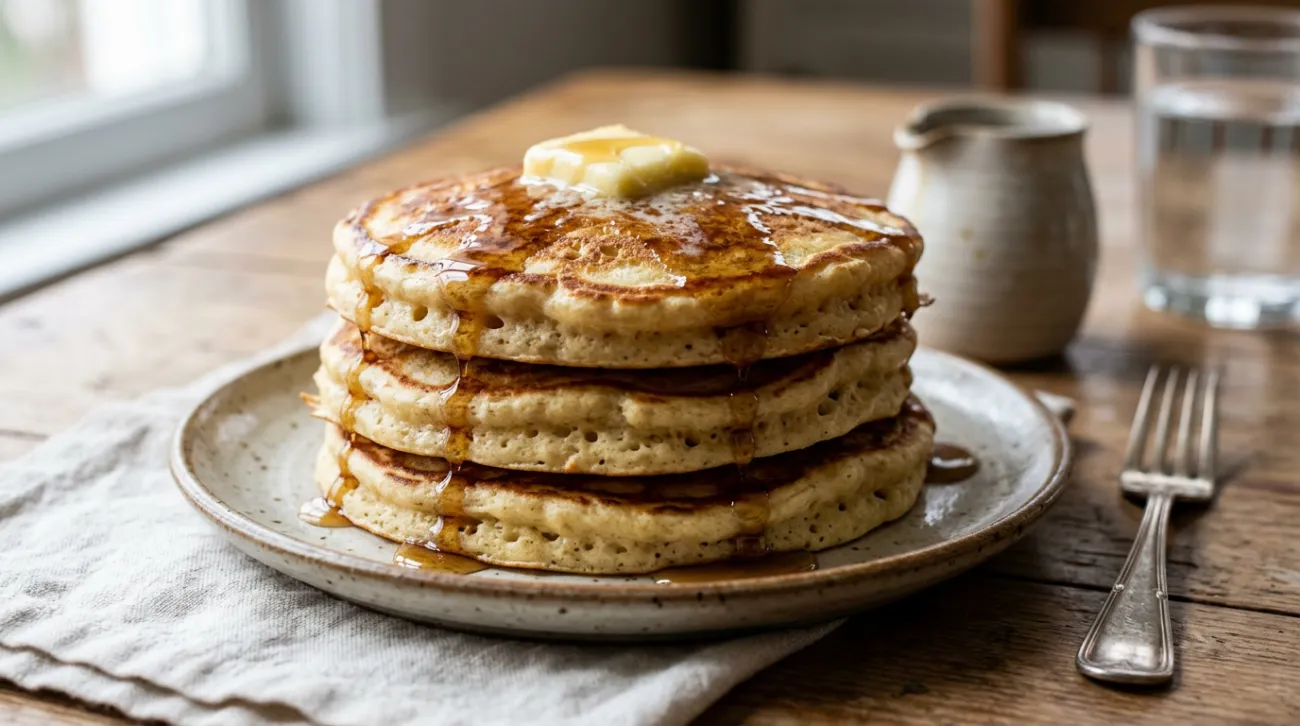
Buttermilk pancakes occupy a special place in the pantheon of American breakfast foods. The tanginess of buttermilk does more than add flavor; its acidity reacts with the leavening to create a lighter, more tender crumb than regular milk could ever achieve. What sets this particular recipe apart is the instruction to let the batter rest, uncovered, for fifteen minutes before cooking. This rest allows the flour to hydrate fully and gives the leavening time to work its magic, resulting in pancakes with better texture and more consistent rise. The use of both baking powder and baking soda provides double insurance against flat, sad pancakes, which is exactly the kind of belt-and-suspenders approach that makes a recipe reliable.
Simple Ingredients for Fluffy Buttermilk Pancakes
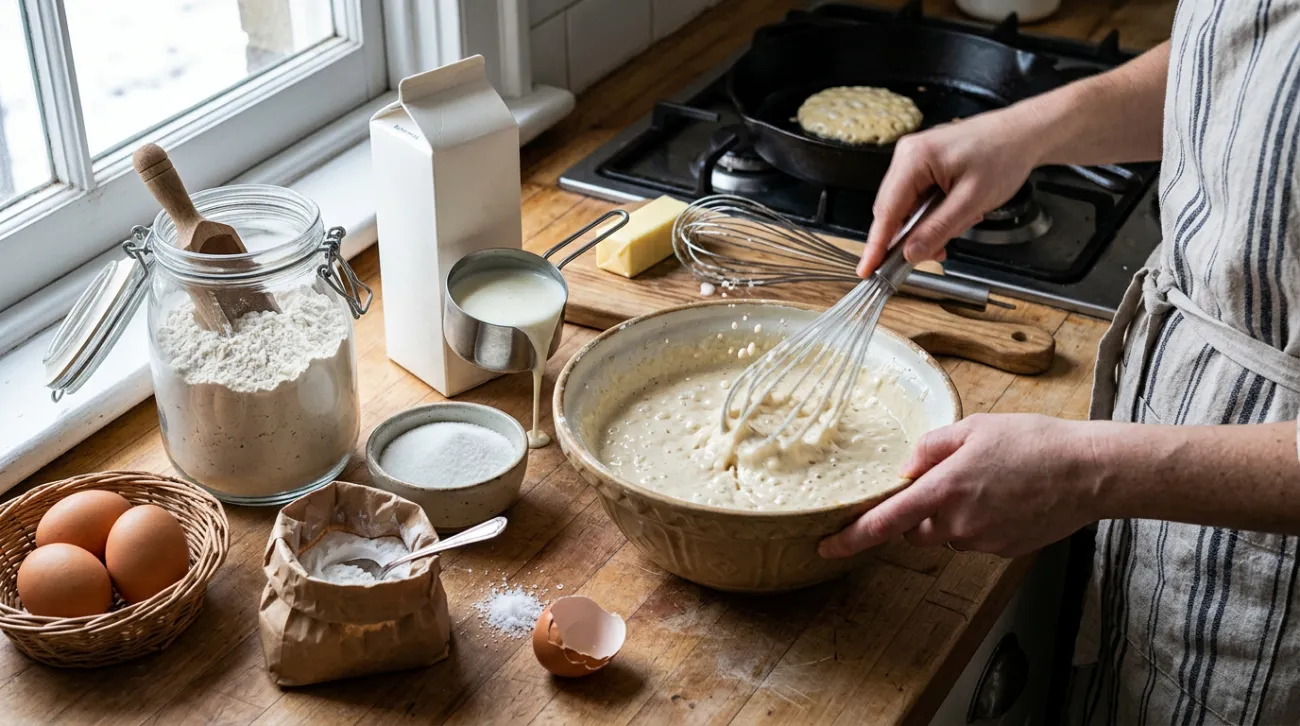
The ingredient list reads like a roll call of pantry basics, which is part of the appeal. You will need all-purpose flour, sugar, baking powder, baking soda, and salt for the dry team. The wet ingredients include eggs, buttermilk, and either melted butter or vegetable oil, depending on your preference. Vanilla is listed as optional, a small addition that adds warmth without being detectably vanilla-flavored in the finished pancakes. The recipe calls for butter or oil to grease the pan during cooking. King Arthur specifies that the fat can be either butter or vegetable oil, giving you flexibility based on what you have on hand and whether you want that subtle dairy richness or a more neutral backdrop.
How the Batter Comes Together
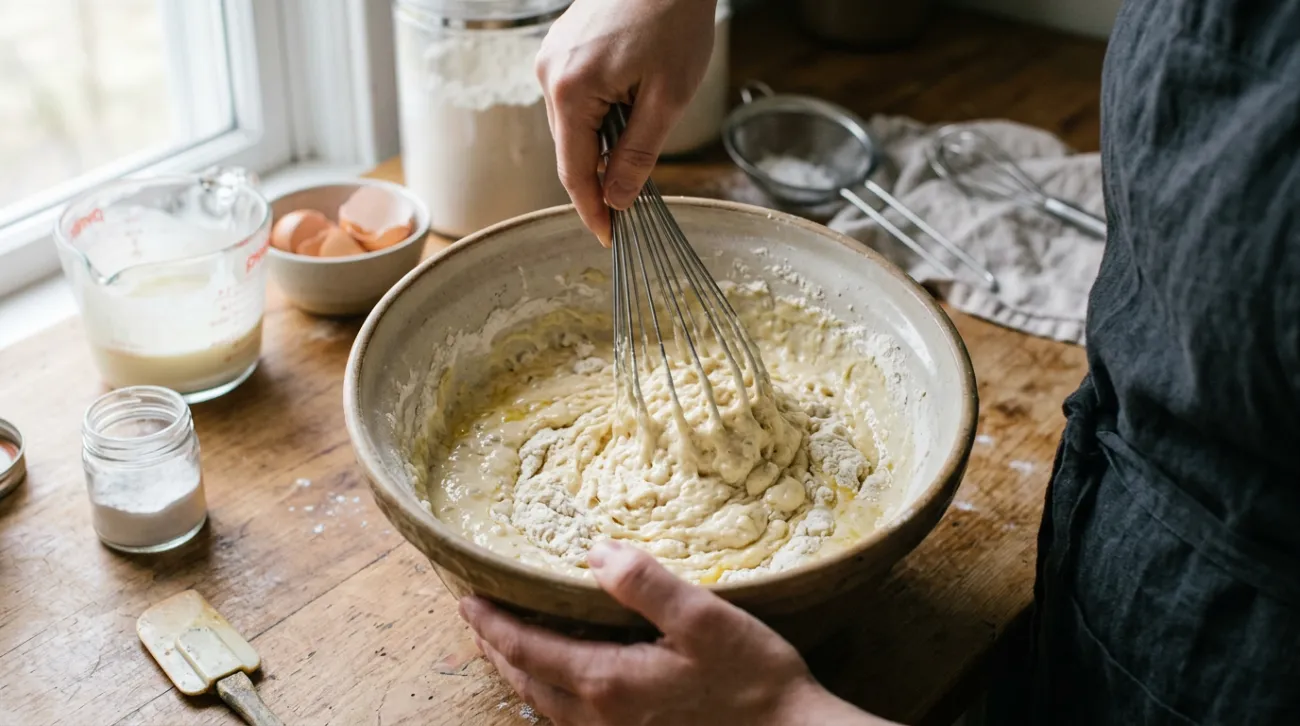
The method follows the classic two-bowl approach that works so well for quick breads and pancakes. You whisk the dry ingredients together in one bowl, then combine the wet ingredients separately before bringing the two together. The key is restraint when mixing: a few lumps in pancake batter are not just acceptable but desirable, because overmixing develops gluten and leads to tough, chewy pancakes. Once the batter is mixed, you let it rest uncovered for fifteen minutes. This is the step that separates good pancakes from truly excellent ones, and it requires patience that pays off handsomely. After the rest, you heat your griddle or skillet over medium heat, grease it lightly, and pour about a quarter cup of batter for each pancake. When the edges look set and bubbles form across the surface, you flip and cook until golden on the second side.
Buttermilk Pancakes From Scratch
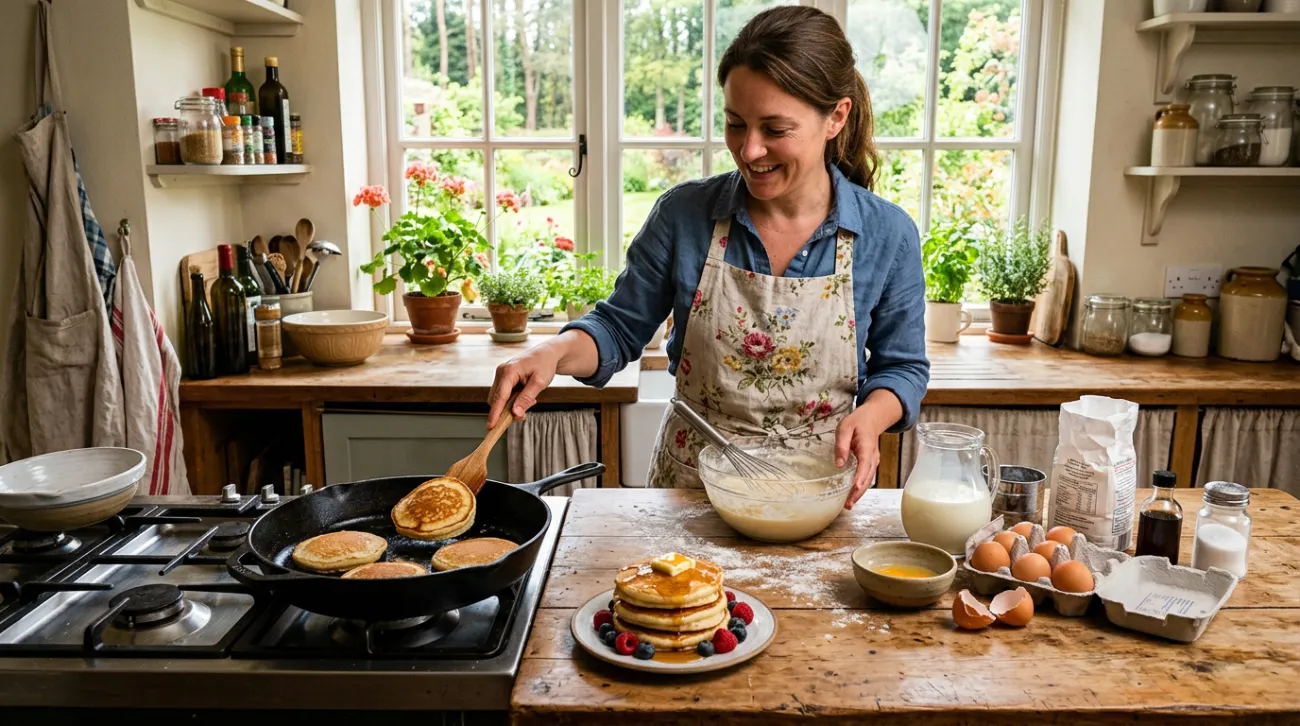
Adapted from King Arthur Baking
Ingredients
- 2 cups (240g) all-purpose flour
- 2 tablespoons sugar
- 2 teaspoons baking powder
- 1 teaspoon baking soda
- 1 teaspoon salt
- 2 large eggs
- 2 cups (454g) buttermilk
- 4 tablespoons (57g) butter, melted, or 1/4 cup (50g) vegetable oil
- 1 teaspoon vanilla extract (optional)
- Butter or vegetable oil for the pan
Instructions
- Whisk together the flour, sugar, baking powder, baking soda, and salt in a large bowl.
- In a separate bowl, whisk together the eggs, buttermilk, melted butter or oil, and vanilla if using.
- Pour the wet ingredients into the dry ingredients and stir until just combined. A few lumps are fine.
- Let the batter rest, uncovered, for 15 minutes.
- Heat a griddle or skillet over medium heat. Grease lightly with butter or oil.
- Pour about 1/4 cup of batter onto the hot griddle for each pancake.
- Cook until the edges look set and bubbles form on the surface, then flip and cook until golden brown on the second side.
- Serve immediately, or keep warm in a 200°F oven until ready to serve.
Notes
The 15-minute rest allows the flour to hydrate and the leavening to begin working, resulting in lighter, more tender pancakes.
For the fat, you can use either melted butter for richer flavor or vegetable oil for a more neutral taste.
Before You Start
- Let the batter rest uncovered for the full 15 minutes for the best texture.
- A few lumps in the batter are desirable; do not overmix.
- The choice between butter and oil affects flavor: butter adds richness, oil provides a cleaner taste.
- Keep finished pancakes warm in a 200°F oven if you are cooking in batches.
Tips for Perfect Griddle Results
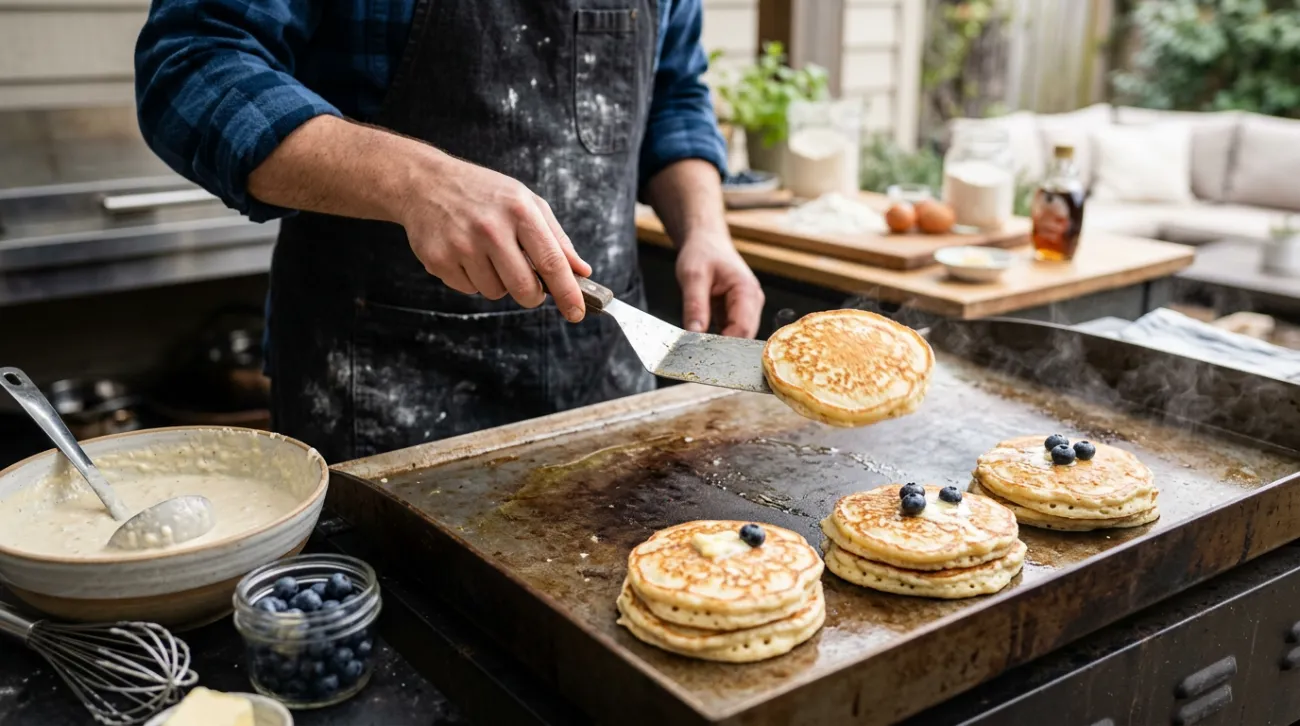
The recipe includes a helpful note about keeping finished pancakes warm in a 200°F oven while you cook the remaining batter. This is the kind of practical advice that transforms the experience of making pancakes for a group, ensuring everyone gets to eat together rather than watching you stand at the stove while their pancakes go cold. The instruction to cook over medium heat is worth following carefully; too high and you will have burnt outsides with raw centers, too low and the pancakes will spread too much before setting. The visual cues are your friends here: watch for those bubbles to form across the surface and for the edges to look set before you make your move with the spatula.
Why the Resting Step Matters
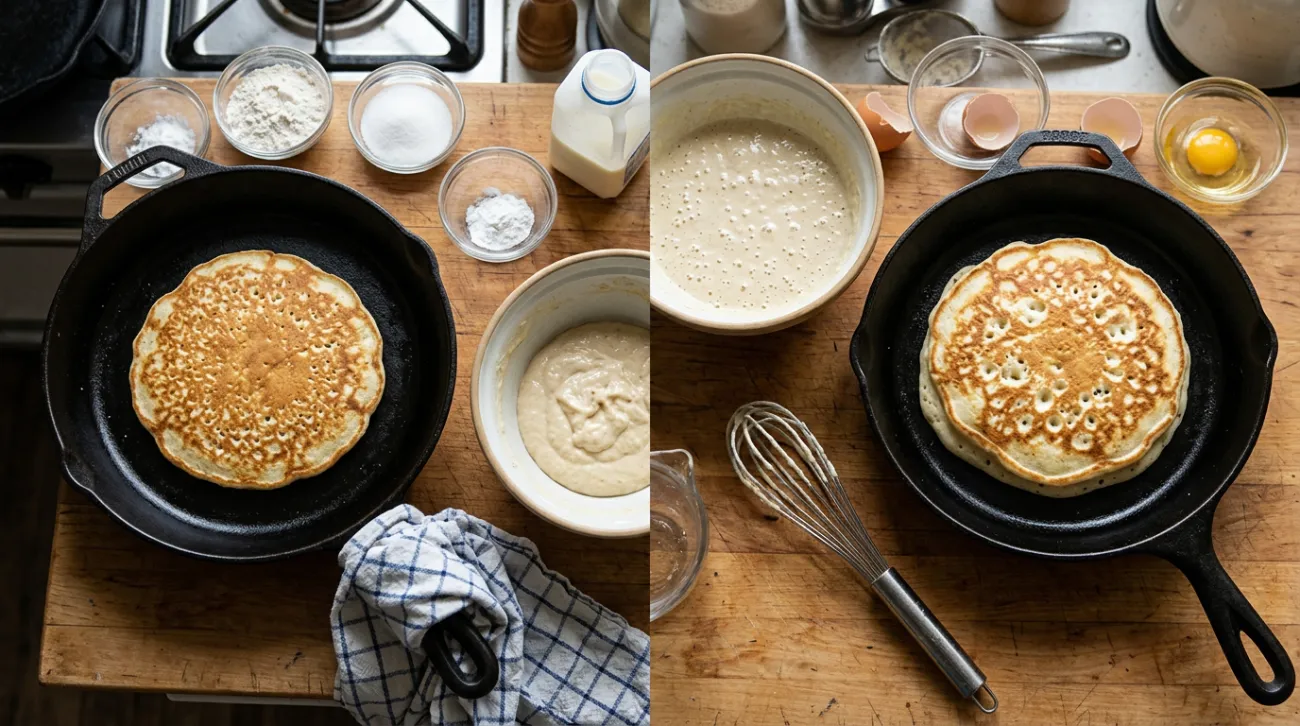
If you have ever wondered why some pancakes turn out dense while others are wonderfully light, the resting period is often the difference. During those fifteen minutes, several good things happen. The flour particles absorb liquid and swell, creating a more cohesive batter. The baking powder and baking soda have time to begin producing carbon dioxide bubbles that will expand further on the hot griddle. The gluten that formed during mixing has time to relax, preventing toughness. It might feel counterintuitive to wait when you are hungry and the griddle is hot, but this is one of those cases where patience is rewarded with noticeably better results.
A Stack Worth Waking Up For
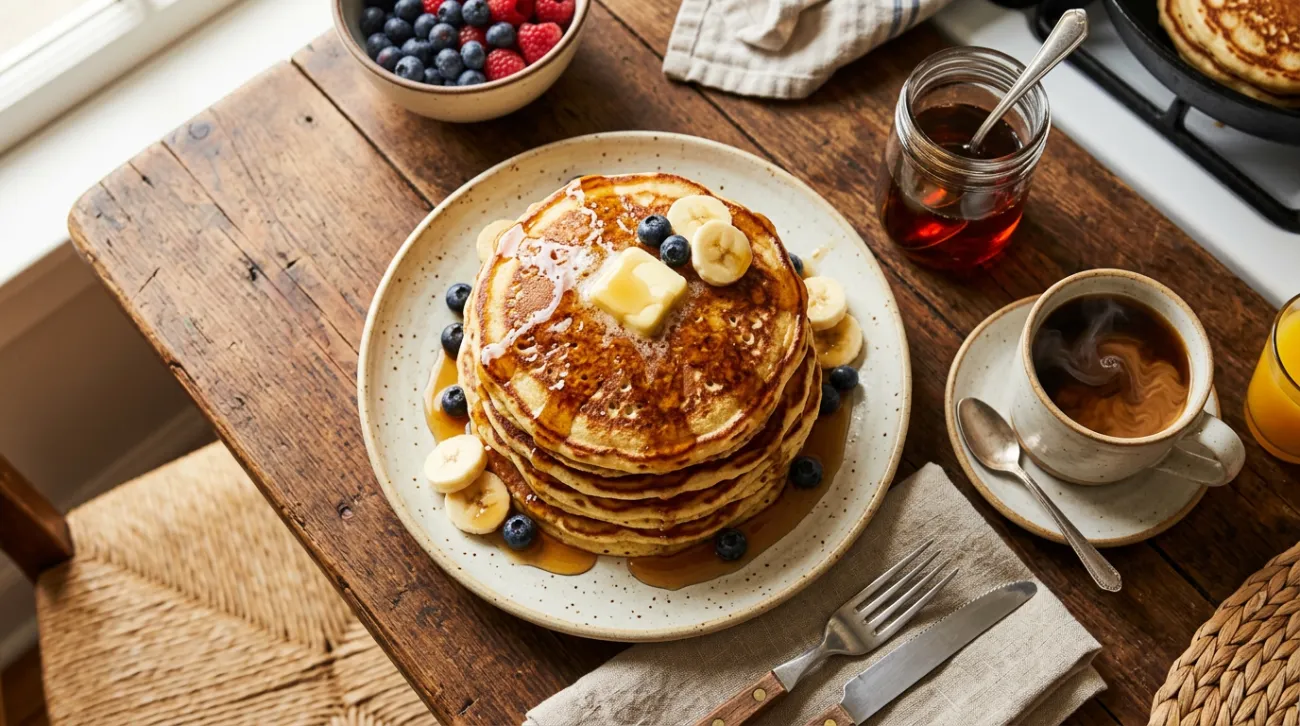
Good buttermilk pancakes from scratch are one of those simple pleasures that never really goes out of style. They require no special equipment, no hard-to-find ingredients, and no particular expertise beyond the willingness to follow a few straightforward steps. What you get in return is a stack of golden, tender pancakes with that distinctive buttermilk tang, ready to receive butter and maple syrup and whatever else your Saturday morning heart desires. Make the batter, give it its rest, and enjoy the quiet satisfaction of a classic done right.