
Translated Recipe
A Yorkshire Pudding in 4 Steps
Hannah Glasse’s 1747 recipe, decoded from its original instructions into something you can actually make today.
Jump to the recipeBefore Yorkshire pudding became the crispy, golden companion to every Sunday roast in Britain, it was something rather more adventurous—a batter cooked directly beneath dripping meat, catching every precious drop of fat as it fell from the fire. Hannah Glasse first published her famous recipe for “A Yorkshire Pudding” in The Art of Cookery Made Plain and Easy in 1747, and the method she describes is so delightfully strange to modern eyes that it deserves a proper translation. This is a Yorkshire pudding in 4 steps, exactly as an eighteenth-century cook would have understood it, with all the stew-pans, dripping, and fire-based baking that entails. Here are those four instructions, one at a time.
The Source: Hannah Glasse’s 1747 Cookbook
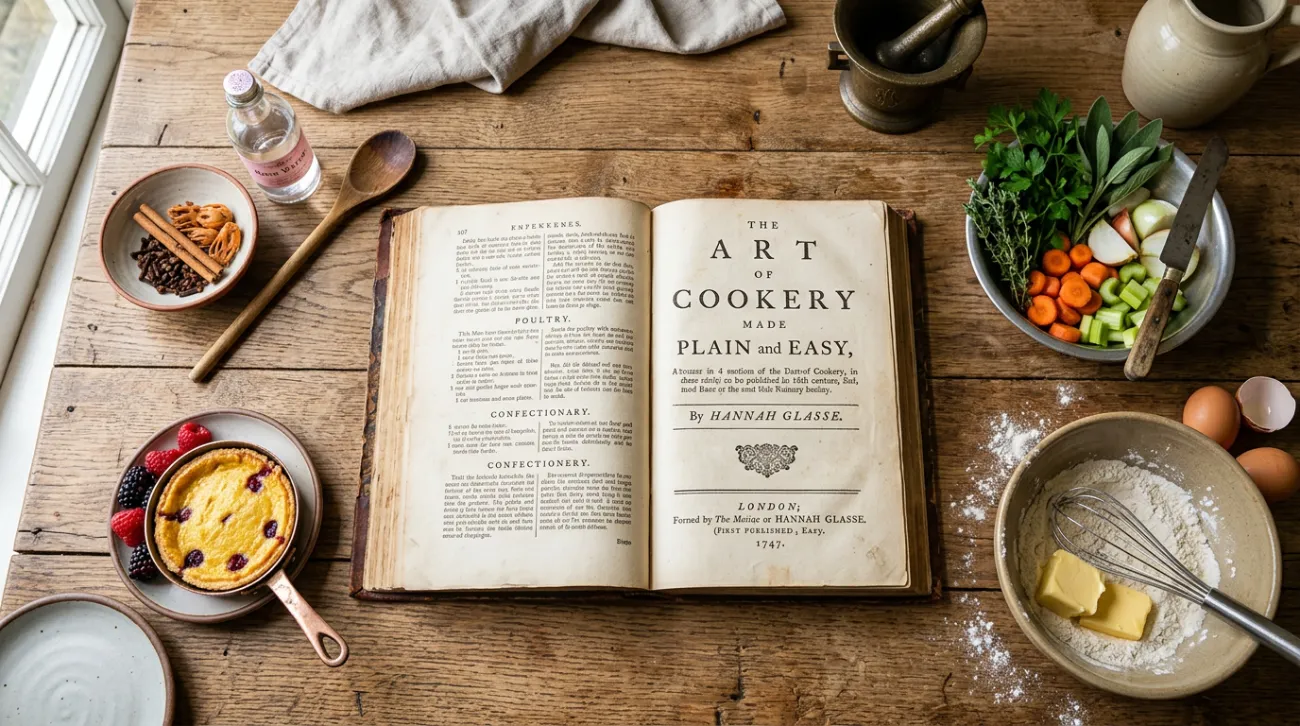
Hannah Glasse’s The Art of Cookery Made Plain and Easy first appeared in 1747, published anonymously under the byline “by a Lady.” The Yorkshire pudding recipe appears in the pudding chapter, just after “A Boiled Plumb-Pudding.” Glasse’s instructions assume you are cooking at an open fire with a piece of meat roasting there, a setup that explains some of the more peculiar details, like setting an upside-down plate in the dripping-pan and letting the dripping drop on the pudding as it cooks. The recipe is also, from a modern perspective, baffling until you understand what she is actually asking you to do.
At a Glance
- Source: The Art of Cookery Made Plain and Easy, Hannah Glasse, 1747 first edition
- Recipe type: Batter pudding cooked under roasting meat
- Steps: 4
- Prep time: Not specified in the original
- Cook time: Not specified in the original
- Serves: Not specified in the original
The Original Recipe, Step by Step
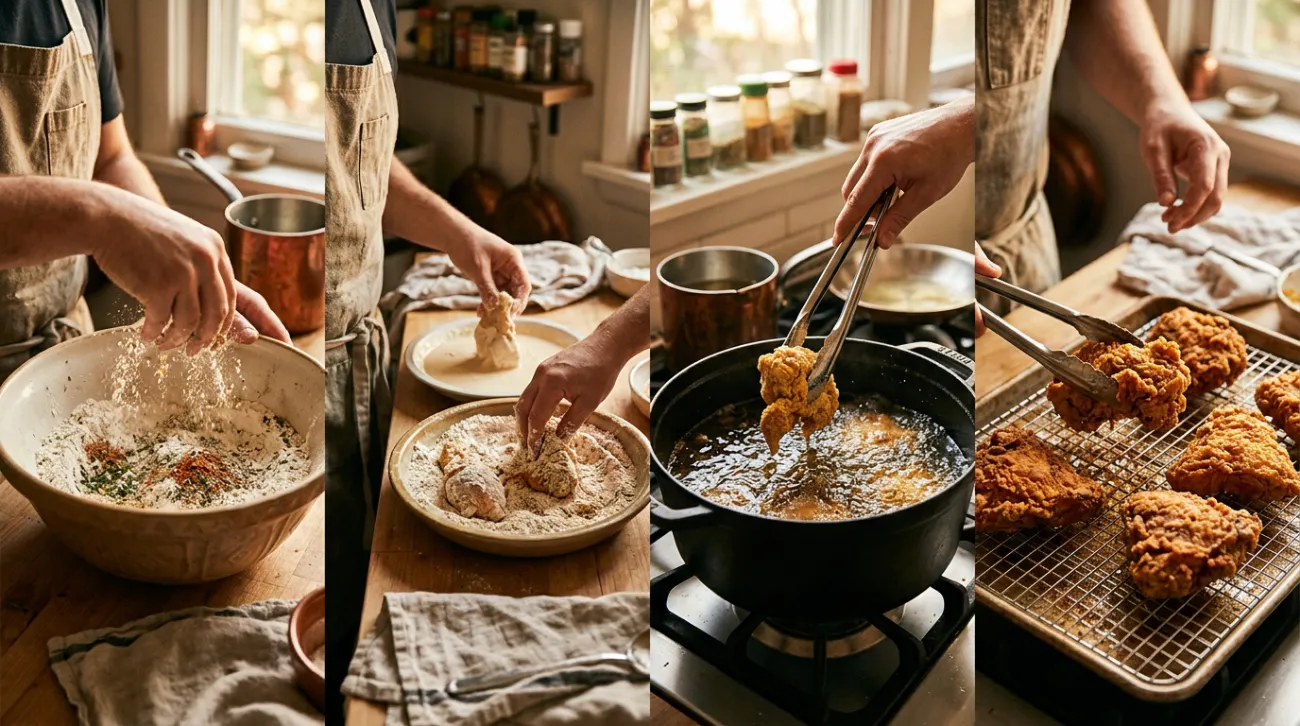
Glasse’s instructions are written as a continuous paragraph, but they divide neatly into four stages: making the batter, starting the pudding on the fire, moving it under the meat, and finishing and serving. Here is every word of her original recipe, broken into those four steps with plain translations so you can follow along without needing to consult a culinary historian or an open hearth.
The original
A Yorkshire Pudding. TAKE a Quart of Milk, four Eggs, and a little Salt, make it up into a thick Batter with Flour, like a Pancake Batter.
Translation
Take a quart of milk (about four cups), four eggs, and a little salt. Mix them together with enough flour to make a thick batter with the consistency of pancake batter. Glasse does not specify an exact flour quantity—you are meant to add flour until the batter reaches the right thickness.
Four eggs, one quart of milk, and vibes for flour. Classic.
The original
You must have a good Piece of Meat at the Fire, take a Stew-pan and put some Dripping in, set it on the Fire, when it boils, pour in your Pudding, let it bake on the Fire till you think it is nigh enough, then turn a Plate upside-down in the Dripping-pan, that the Dripping may not be blacked;
Translation
You need a good piece of meat already roasting at the fire. Take a stew-pan and put some dripping in it. Set the pan on the fire until the dripping is boiling hot. Pour your batter into the hot dripping and let the pudding bake on the fire until you judge it nearly done. Then turn a plate upside-down in the dripping-pan beneath the meat—this is to keep the dripping from burning or blackening on the pan bottom.
An upside-down plate! Eighteenth-century kitchen hacks!
The original
set your Stew-pan on it under your Meat, and let the Dripping drop on the Pudding, and the Heat of the Fire come to it, to make it of a fine brown.
Translation
Set your stew-pan (with the partially cooked pudding) onto the upside-down plate, positioning it directly under the roasting meat. Let the fat and juices drip down onto the pudding while the heat from the fire browns the top. The pudding finishes cooking this way, becoming golden brown while absorbing all those drippings.
Nothing says Sunday dinner like a pudding shower.
The original
When your Meat is done and set to Table, drain all the Fat from your Pudding, and set it on the Fire again to dry a little; then slide it as dry as you can into a Dish, melt some Butter, and pour into a Cup, and set in the Middle of the Pudding. It is an exceeding good Pudding, the Gravy of the Meat eats well with it.
Translation
When your meat is done and has been set on the table, drain all the fat from the pudding. Return the pudding to the fire briefly to dry it out a little. Slide it, as dry as possible, onto a serving dish. Melt some butter, pour it into a cup, and set the cup in the middle of the pudding. Glasse notes this is an “exceeding good Pudding” and that the gravy from the meat goes very well with it.
Butter cup in the middle = 1747’s fondue pot.
Our Modern Translation of the Recipe
Glasse cooks this pudding at an open fire, under a roasting piece of meat, which most of us do not have in the kitchen. The card below is our plain-language translation of her recipe. It keeps everything she says and adds nothing: where the original gives no amount, time or temperature, the card says so.
Our modern translation
A Yorkshire Pudding
From The Art of Cookery Made Plain and Easy, Hannah Glasse, 1747
Ingredients
- 1 quart milk (about 4 cups / 950 ml)
- 4 eggs
- A little salt
- Flour, enough to make a thick batter like pancake batter (amount not specified in the original)
- Dripping from roasting meat
- Butter, for serving
Instructions
- 1 Mix the milk, eggs and salt, then add flour until you have a thick batter, like pancake batter. The original does not say how much flour.
- 2 Have a good piece of meat roasting at the fire. Put some dripping in a stew-pan and set it on the fire. When the dripping boils, pour in the batter and let the pudding bake at the fire until you think it is nearly done.
- 3 Turn a plate upside down in the dripping-pan, so the dripping does not burn black. Set the stew-pan on the plate, under the meat. Let the dripping from the meat fall onto the pudding while the heat of the fire browns it.
- 4 When the meat is done and has been set on the table, drain all the fat from the pudding and set it on the fire again to dry a little. Then slide it, as dry as you can, into a dish. Melt some butter, pour it into a cup, and set the cup in the middle of the pudding.
Notes
Glasse writes: “It is an exceeding good Pudding, the Gravy of the Meat eats well with it.” The original gives no amount of flour, no cooking time and no temperature.
Want to cook it today?
Glasse gives no flour amount, cooking time or temperature, so we have not invented any. For a Yorkshire pudding with exact measurements, try this tested modern recipe from Food Network Kitchen. It is a different recipe, made as individual puddings in a muffin tin, and it is not Glasse’s.
What to Know Before You Cook It
Key Takeaways
Glasse gives no amount of flour: she says to make a thick batter, like a pancake batter. She gives no cooking time either, only to let the pudding bake at the fire until you think it is nigh enough. The dripping goes into the stew-pan on the fire, and the batter goes in when it boils. At the end, drain the fat from the pudding and set it on the fire again to dry a little, then slide it into a dish. The butter is melted and poured into a cup, which sits in the middle of the pudding.
To cook this exactly as Glasse wrote it, you would need an open fire with a piece of meat roasting at it, plus a stew-pan and a dripping-pan. The upside-down plate is the cleverest detail. It sits in the dripping-pan so the dripping does not burn black, and the stew-pan rests on it under the meat so the dripping drops straight onto the pudding.
Glasse gives no flour amount, no cooking time and no temperature, so we have not invented any for the card. Modern Yorkshire puddings are usually made as individual puddings in a muffin tin with exact measurements, which is a different recipe from hers. If you would like to cook one today, use a tested modern recipe, like the one in the box above.
The Drip That Launched a Thousand Puddings
Hannah Glasse’s Yorkshire pudding is a reminder that the best recipes often come from the simplest premise: do not let anything go to waste. A quart of milk, four eggs, some flour, and whatever dripping falls from your roast—this is peasant economy elevated to genuine deliciousness. Whether you attempt the full open-fire method or adapt it for your oven, you are participating in a tradition nearly three centuries old, one that transforms humble batter into something Glasse herself called “exceeding good.” The butter cup in the middle is optional, but honestly, why would you skip it?